Taxi touts, "free" gifts, camel ride price switches, fake guides and short change: how the common tricks in Sharm El Sheikh and Egypt's tourist places work, and how to avoid them.
Most people you meet in Egypt are friendly and genuine. A few see visitors as easy money, and their tricks are well known, so they are simple to spot. This guide gathers the scams that government travel advice and guidebooks describe, in Sharm El Sheikh and in the places many visitors add to their trip: the other Red Sea resorts, Cairo and the Giza pyramids, Luxor and Aswan. For each one we explain how it works and how to avoid it, with every source listed at the end.
The UK Foreign Office (FCDO) puts it simply: "Be cautious in tourist areas, where scammers and touts sometimes target foreign nationals." Ireland's Department of Foreign Affairs warns about "scammers and 'tour guides'" in the same way. Rough Guides says the scams are not usually dangerous, just annoying, and that a firm, polite refusal works better than being rude. It also reminds visitors not to assume that everyone who approaches them is trying to scam them.
For the official safety advice, see Is Sharm El Sheikh safe?
Airport touts, taxis and fares
How it works: Rough Guides says touts may "latch on to you as soon as you arrive" at the airport in Cairo or Luxor, then try to find out where you are staying and what your plans are. Some offer to get your visa: the FCDO says these agents often charge more than the required 30 US dollars. With taxis, Rough Guides calls it "the all-time classic": drivers "forget" to turn on the meter or say it is broken, especially around airports. In Your Pocket adds routes that grow strangely long and drivers who claim to have no change, and Canada's travel advice notes that many taxis do not have working meters.
How to avoid it:
- Check your entry rules before you fly. The FCDO says that if you fly into Sharm El Sheikh and stay less than 15 days at resorts in Sharm El Sheikh, Dahab, Nuweiba or Taba, you do not need a visa: you get a free entry stamp at the airport. Our visa checker shows what you need.
- If you do need a visa on arrival, buy it at the airport kiosk before the immigration counters: 30 US dollars, cash only. The FCDO says to report any agent who harasses you to the tourist police in the terminal.
- Agree a taxi fare before the ride starts, and have small notes ready. In Cairo, Lonely Planet says ride-hailing apps help you avoid arguing over fares, especially at the airport.
- In Sharm, you can book a fixed-price airport car before you fly, so the price is settled before you land. Our taxi guide covers local taxis.
"Free" gifts, photos and help
How it works: In Your Pocket describes a seller who presses a scarf, a small papyrus bookmark or a trinket into your hands as a "gift". Once you accept it, payment is suddenly expected, often at an inflated price. Others offer to take your photo or show you a shortcut, then demand a tip (Rough Guides). At big sites such as the Giza Plateau, the Egyptian Museum and Saqqara, men with no official role may attach themselves to you with directions or an impromptu tour, then demand payment (In Your Pocket).
How to avoid it:
- Do not accept anything handed to you on the street. If it really is free, saying "no thank you" costs you nothing.
- Decline photo offers from strangers, and help you did not ask for. A firm "no thank you" while you keep walking settles it almost every time.
- As Rough Guides puts it: if you did not ask for help, you are not obliged to pay.
Papyrus, perfume and "family shop" detours
How it works: A driver, guide or friendly stranger suggests a quick stop at a "government" papyrus institute or an essential oils shop, sometimes with a special discount for that day only (In Your Pocket). Rough Guides describes the hard sell dressed up as hospitality: "Come have tea, no pressure!", and then you are in a shop with someone's cousin pushing carpets. Lonely Planet warns about guides who insist you visit their "uncle's friend's carpet store".
These stops are almost always about commission, which Rough Guides says is "quietly added to your bill". Rough Guides adds that "genuine" papyrus paintings and "pure" lotus oils are often mass-produced, and In Your Pocket says a surprising amount of "papyrus" is really banana leaf.
How to avoid it:
- Treat any unplanned detour with healthy doubt, and say you would rather stick to your plan.
- For the real thing, Rough Guides suggests licensed dealers or museum shops.
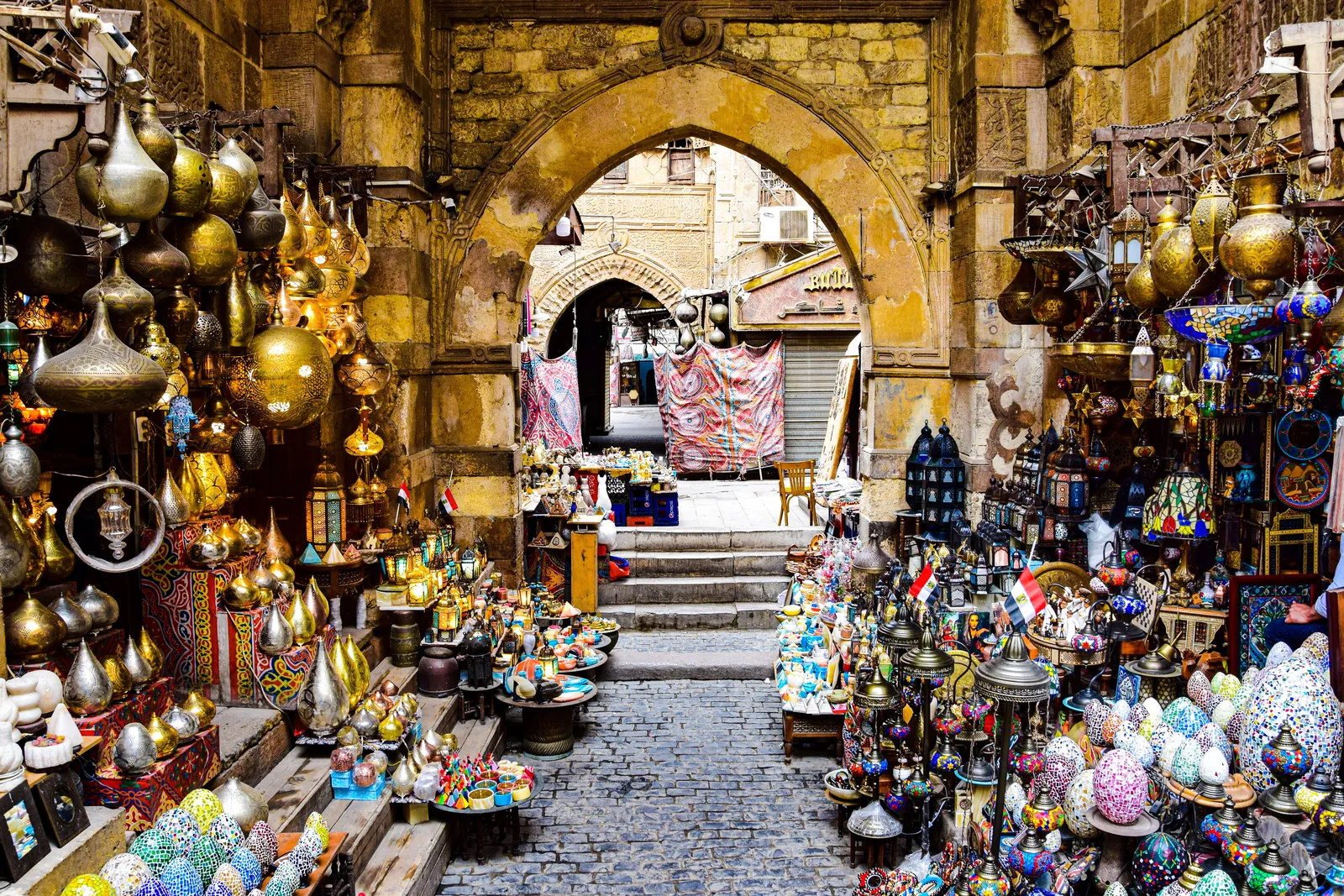
- Haggling in markets is normal. Lonely Planet suggests checking prices for similar items in nearby shops, so you can tell if you are being overcharged. A price posted on the product is usually fixed.
Camel and horse rides at the pyramids
How it works: A handler quotes a low price, "sometimes as little as a dollar", for a short ride or a photo. Away from the crowd, the price at the end is "dramatically higher", and some handlers will not let the animal kneel until you agree to pay (In Your Pocket). Lonely Planet says the horse and camel guides at Giza "may well try to trick you into paying more", and Rough Guides warns of the "quick photo" with a camel or horse that ends in a demand for cash.
How to avoid it:
- Agree the full price before you get on, including the ride back and any stops on the way (In Your Pocket).
- Ask around for the average price, pick the rider who puts you most at ease, and do not pay until the ride has finished (Lonely Planet).
- Ask the price before any photo with an animal (Rough Guides).
- Or walk: Lonely Planet suggests a sun hat, plenty of water and exploring the site on foot.
Unofficial guides and ticket sellers
How it works: At places like the pyramids or Karnak, unofficial "guides" or ticket resellers may approach you (Rough Guides). Some sell forged tickets, and others charge a fee to walk you to the official counter (In Your Pocket). Lonely Planet warns about unverified guides who offer services you did not ask for or push you into quick decisions, and says prices that look too good to be true often come with hidden fees.
How to avoid it:
- Buy tickets only at official ticket windows or on official online booking sites (In Your Pocket).
- Pre-book recommended guides or tours where you can, as Ireland's travel advice suggests.
- Look for guides with Ministry of Tourism badges (Rough Guides). In Your Pocket says licensed guides wear official identification, are booked in advance rather than found at the gate, and will not mind showing it.
- Lonely Planet says reliable guides are open about costs and may be recommended by reputable hotels or travel agencies.
"The site is closed today"
How it works: A taxi driver or unofficial guide tells you, often quite convincingly, that the place you are heading to is closed today, for a holiday or maintenance. Then they offer to take you somewhere else, usually a shop that pays them commission (In Your Pocket).
How to avoid it: Check opening hours yourself before you go, using an official source. Doubt any surprise claim that a major site is closed, especially when a new plan follows straight away.
Excursions and boat trips sold by touts
How it works: Rough Guides describes full-time touts who push excursions, "often vastly marked up". On the Nile at Luxor and Aswan, In Your Pocket says some felucca captains quote a price per boat, then call it a price per person once you are on board, or stretch a "short" sunset sail and charge for the extra time.
How to avoid it:
- Follow the FCDO's advice: book excursions at your resort or through approved agents or tour operators.
- Before you board any boat, agree the total price, how long the trip lasts, and whether the price is per person or per boat (In Your Pocket).
- For safety at sea, see our safety guide.
Money tricks
How it works: In busy markets, change is occasionally given short, especially when you pay with a large note and things move fast (In Your Pocket). Taxi drivers often claim to have no change for big notes, and Rough Guides says nobody ever has change for a 200-pound note. Rough Guides also warns about exchange kiosks with "too-good-to-be-true rates". And if you pay in US dollars or euros, World Travel Guide says your change usually comes back in Egyptian pounds.
How to avoid it:
- Count your change before you walk away, especially in taxis, and keep a rough idea of the exchange rate in your head (In Your Pocket, Rough Guides).
- Carry small notes in a separate pocket from larger ones (Rough Guides).
- Change money at airports and banks, not at street kiosks (Rough Guides).
- Use cash machines at major banks, as some machines charge high fees (Rough Guides). Ireland's advice is to avoid ATMs after dark, especially when alone, and not to carry cards, tickets and cash together.
Our money guide covers notes, cards and tipping.
If something goes wrong
- Call the tourist police on 126. The FCDO and Ireland's Department of Foreign Affairs both give this number. Lonely Planet says tourist police are stationed at every tourist destination in Egypt and wear a navy blue shoulder badge with a gold eagle and the words "Tourism and Antiquities Police". Canada's advice says their officers usually wear a distinctive arm band.
- Report it before you leave Egypt. The FCDO says that otherwise "it will be difficult to prosecute later". Ask for a copy of the police report when you make it (Canada), as you may need it for an insurance claim (FCDO).
- Card lost or stolen? Tell your card issuer. The FCDO says your bank may be able to give you a code to take cash from an ATM without the card.
- Tell your insurer and travel provider. The FCDO says to contact your insurance company as soon as possible, keep receipts and police reports, and contact your tour operator if you travelled with one.
- Embassy help. British nationals can reach the British Embassy in Cairo, including in an emergency, through the FCDO's getting help page. If something happens to you, family in the UK can call the FCDO in London on 020 7008 5000, 24 hours a day. Irish citizens can contact the Irish Embassy in Cairo, and other visitors their own embassy.
- Complaints afterwards. Lonely Planet says you can dial 19654 to reach Egypt's Ministry of Tourism and Antiquities.
Useful links
- Fixed-price airport transfers in Sharm El Sheikh
- Taxis in Sharm El Sheikh
- Sharm El Sheikh Airport guide
- Egypt visa checker
- Money in Sharm El Sheikh: currency, cards and tipping
- Is Sharm El Sheikh safe? Official travel advice
Sources
- Scammers and touts, reporting a crime and booking excursions, UK Foreign Office safety and security (updated 27 October 2026): gov.uk
- Free entry stamp, visa on arrival and visa agents, UK Foreign Office entry requirements (updated 27 October 2026): gov.uk
- Tourist police number, insurers and the FCDO in London, UK Foreign Office getting help (updated 27 October 2026): gov.uk
- Police reports, stolen cards and insurance claims, UK Foreign Office, reporting a crime abroad (updated 16 November 2023): gov.uk
- Contacting the British Embassy Cairo, UK government (updated 7 November 2025): gov.uk
- Scammers and "tour guides", cash machines and reporting crime, Ireland's Department of Foreign Affairs (updated 23 October 2026): ireland.ie
- Taxi meters, tourist police and police reports, Government of Canada travel advice (updated 26 May 2026): travel.gc.ca
- Common scams, taxis and money, Rough Guides (updated 12 May 2025): roughguides.com
- Touts, commission and small notes, Rough Guides (updated 5 February 2025): roughguides.com
- Common Egypt travel scams, In Your Pocket (25 July 2026): inyourpocket.com
- Scams at the pyramids, guides and ride-hailing in Cairo, Lonely Planet (8 December 2025): lonelyplanet.com
- Haggling, tourist police badge and complaints line, Lonely Planet (24 September 2025): lonelyplanet.com
- Change given in Egyptian pounds, World Travel Guide (26 December 2025): worldtravelguide.net