
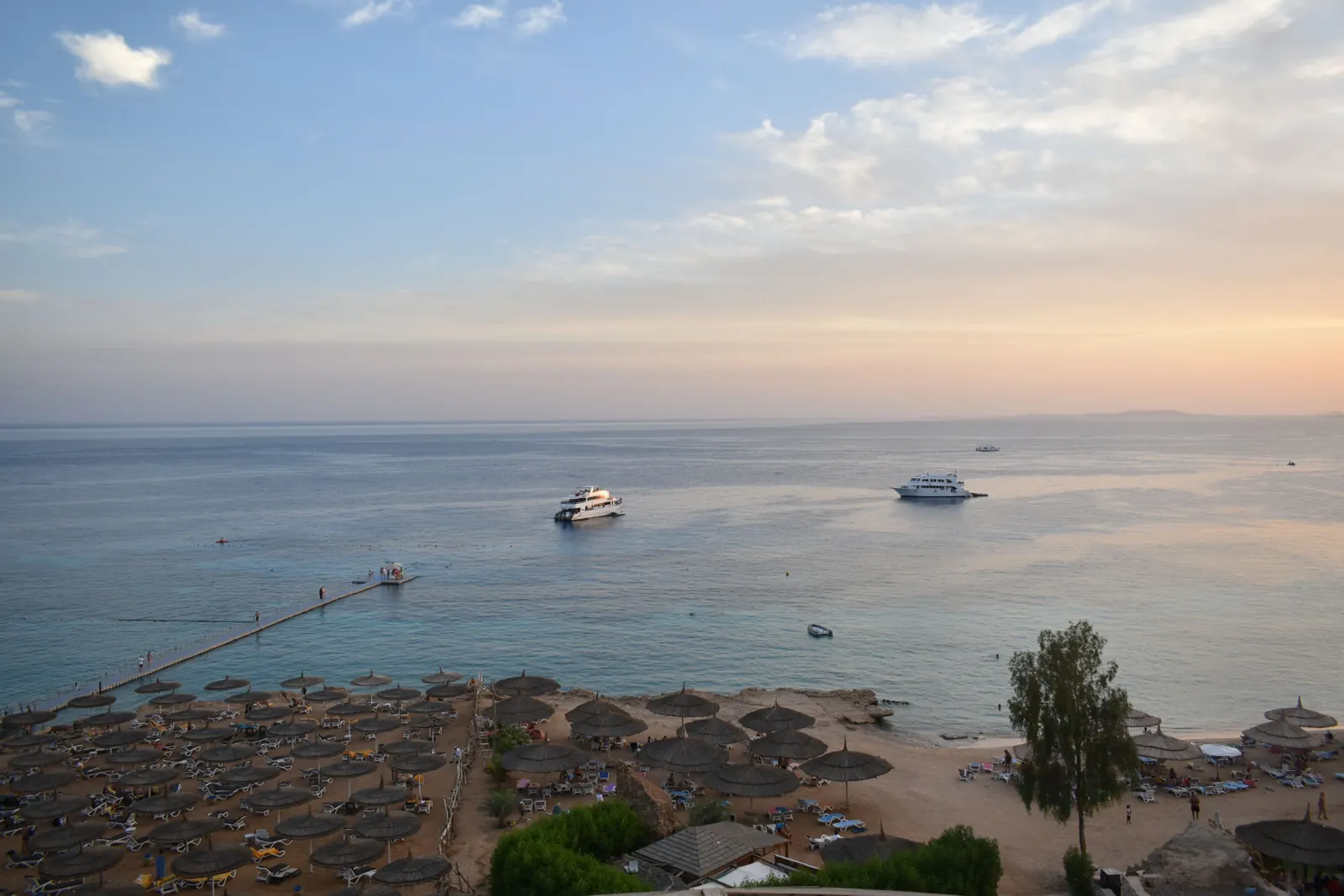
Free tool · Updated April 2026
Best time to visit Sharm El Sheikh
Month by month, air temp, sea temp, rain, crowds, prices and the story behind each season. So you can book at the right time, for the right reason.
Short answer: late September to October, or November for value.
- Best overall
Late Sep, October
Warmest sea of the year, cooler air, best dive visibility.
- Best value
November, Mid-March
Great weather, low prices, thin crowds, shoulder gold.
- Avoid if heat-averse
July, August
37°C+ days, shade-to-pool-to-AC only.
- Avoid for quiet
Christmas + NYE
20 Dec to 8 Jan, Western + Orthodox peak, +40 to 60% prices.
Month by month
Averages based on 2020 to 2024 reanalysis data.
-
January
Busy- Air
- 22° / 13°
- Sea
- 22°C
- Sun
- 8 hrs/day
- Price
- £££
Russian/CIS New Year (Jan 1 to 8) packs resorts; mild sunny days, chilly evenings; sea borderline for non-Nordic swimmers.
-
February
Moderate- Air
- 23° / 14°
- Sea
- 21°C
- Sun
- 9 hrs/day
- Price
- ££
Coolest sea of the year but air is pleasant; great for UK half-term families and land excursions (St Catherine, desert).
-
March
Moderate- Air
- 26° / 16°
- Sea
- 21°C
- Sun
- 10 hrs/day
- Price
- ££
Sweet spot starts: warm days, cool nights, thin crowds; sea still bracing. Ramadan 2026 mid-Feb to mid-Mar.
-
April
Busy- Air
- 28° / 19°
- Sea
- 23°C
- Sun
- 10 hrs/day
- Price
- £££
Easter peak plus Sham El Nessim (Egyptian spring holiday); perfect weather, sea warming fast, book early.
-
May
Moderate- Air
- 32° / 22°
- Sea
- 24°C
- Sun
- 11 hrs/day
- Price
- ££
Pre-summer sweet spot: hot but bearable, sea comfortable, reef visibility excellent, prices dip after Easter.
-
June
Moderate- Air
- 35° / 25°
- Sea
- 26°C
- Sun
- 13 hrs/day
- Price
- ££
Heat ramps up (35°C+); sea warm, 13 hrs sunshine, dive visibility at peak. Hot-weather-tolerant travellers only.
-
July
Busy- Air
- 37° / 27°
- Sea
- 27°C
- Sun
- 13 hrs/day
- Price
- £££
European school holidays fill resorts; brutally hot on land (37°C+), shade-to-pool-to-AC rhythm essential.
-
August
Peak- Air
- 37° / 28°
- Sea
- 28°C
- Sun
- 12 hrs/day
- Price
- ££££
Hottest and most crowded; warmest sea of the year (28°C); only come if you actively want extreme heat.
-
September
Moderate- Air
- 35° / 26°
- Sea
- 28°C
- Sun
- 11 hrs/day
- Price
- ££
Best month on balance: sea still bath-warm, air easing, crowds thinning, prices soften after August peak.
-
October
Busy- Air
- 31° / 23°
- Sea
- 27°C
- Sun
- 10 hrs/day
- Price
- £££
Reef-diving peak season: flat water, 27°C sea, 30m+ visibility, hammerheads at Ras Mohammed; UK half-term surge.
-
November
Moderate- Air
- 27° / 19°
- Sea
- 25°C
- Sun
- 9 hrs/day
- Price
- ££
Shoulder sweet spot: warm enough to swim, cool enough to walk, lowest shoulder prices of the year.
-
December
Peak- Air
- 24° / 16°
- Sea
- 24°C
- Sun
- 8 hrs/day
- Price
- ££££
Christmas/NYE peak; sea still 24°C (warmer than UK July); book 2 to 3 months out, prices spike 40 to 60%.
Travelling in Ramadan?
Ramadan 2027: 8 February to 9 March
Sharm El Sheikh's Red Sea resorts operate normally for tourists during Ramadan, restaurants, bars, diving, excursions all run as usual. Expect reduced hours at local Egyptian restaurants in the Old Market, and quieter souks during the day. Eid al-Fitr (3 days after Ramadan ends) brings a short domestic Egyptian tourism wave.
What to pack, by season
Sharm is desert-coast, dry, sunny, UV-heavy all year. Pack accordingly.
-
Winter (Dec to Feb)
- Light jumper / fleece for evenings
- Long trousers for dinners
- Wetsuit if diving (sea 21 to 22°C)
- Sunglasses, SPF 30+
-
Spring (Mar to May)
- Light layers, thin jacket for evenings
- Swimwear + rashguard
- Reef-safe sunscreen
- Walking shoes for Sinai excursions
-
Summer (Jun to Aug)
- Ultra-light, loose clothing
- Wide-brim hat, polarised sunglasses
- SPF 50+, reef-safe, lots of it
- Reusable water bottle, you'll drink litres
-
Autumn (Sep to Nov)
- Beachwear by day, light layers by night
- Dive gear or hire at the dive centres
- Light windbreaker for desert excursions
- Reef-safe sunscreen
Frequently asked
When is the sea warm enough for swimming?
The Red Sea at Sharm stays above 22°C year-round. Peaks 28°C in August-September, drops to ~21°C in February, still warmer than the Mediterranean. Most UK visitors find the sea comfortable from April through November.
When is the best time to dive in Sharm?
October is the dive peak: flat water, 27°C sea, 30m+ visibility, and hammerhead aggregations at Ras Mohammed. June and September are nearly as good. Avoid February if you want warm water.
Does it ever rain in Sharm?
Almost never. Total annual rainfall is ~25 mm, most of it in one or two brief winter showers. You'll essentially never have a rained-off day.
Is Ramadan a bad time to visit?
Not at all for Red Sea resorts. Sharm's tourist zones operate normally, restaurants, bars, diving, excursions all run full hours. You may notice shorter hours at local Egyptian eateries in the Old Market, and a quieter souk during the day. Evenings come alive after iftar.
How far in advance should I book?
Christmas/NYE and the Russian NY week (Jan 1 to 8): 3+ months ahead. Easter + UK half-term: 2 months. August: 2 months. Shoulder months (Nov, mid-Mar, May): 2 to 4 weeks is usually fine.
Open-Meteo ERA5 historical reanalysis (2020 to 2024) + climatestotravel.com. Sea temperatures are approximate averages.
Ready to plan your trip?
Transfers, tours, concierge and property, all in one place. Fixed prices and help on WhatsApp.